Configuring Mobile UI Profiles
Mobile user interface profiles can be configured to determine the content of the main mobile screen or a menu screen using the MobileUnitConfiguration reference group for a single equipment unit or the OperationalProfile for a group (fleet) of mobile units.
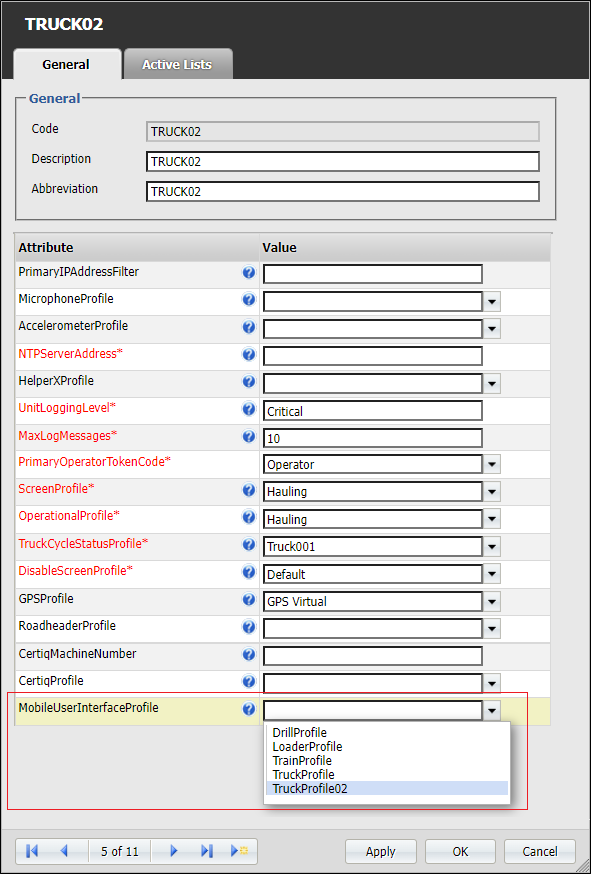
A new mobile user interface profile can be created using the MobileUserInterfaceProfile reference data group and linked to either MobileUnitConfiguration or OperationalProfile.
Mobile User Interface profiles are created in the Mobile User Interface reference data group. To open the group, in the Reference Edit service configuration pane,
-
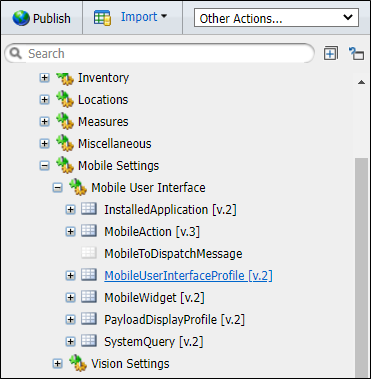
Open Configuration Items > Mobile Settings > Mobile User Interface > Mobile User Interface Profile.
-
Checkout the table and open the TruckProfile template deployed with the default reference data.
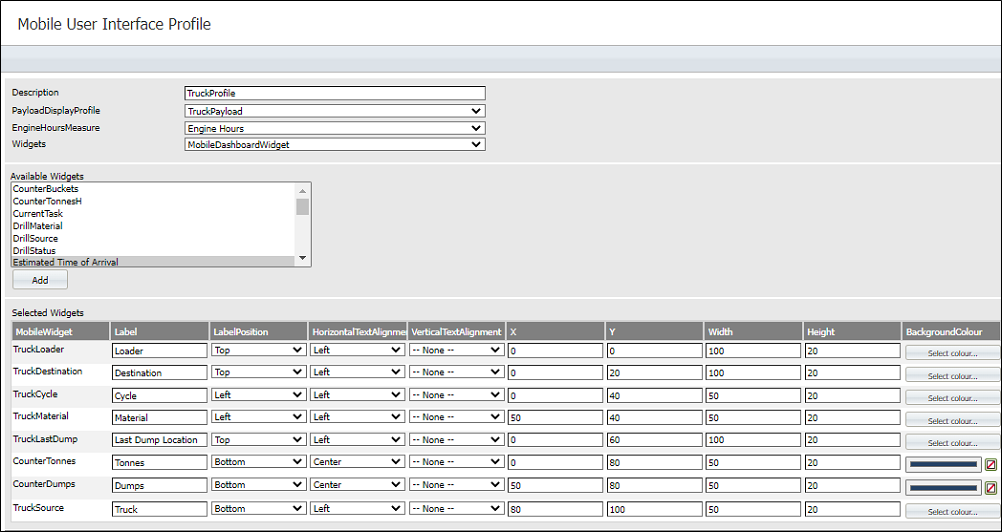
The default Truck profile contains a number of Widgets that will appear on the mobile unit screen. The appearance of the widgets is configured in the fields provided.
-
Click OK to close the Truck profile.
The following outlines the process of creating and configuring a Mobile User Interface profile.
Create a Mobile UI Profile
To create a new profile,
-
Click the New button in the Mobile User Interface Profile table.
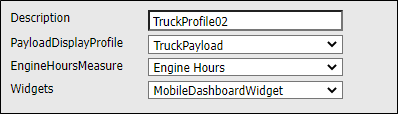
A blank Mobile User Interface Profile form is displayed.
-
Enter a description for the profile in the Description field.
Pitram will assign a unique identifier to the profile. The Description you enter will be used when assigning the new profile to a unit or fleet configuration.
-
Select the Payload Display Profile for the new mobile UI profile from the drop down provided.
-
Select the applicable Engine Hours Measure for the profile from the drop down.
-
Use the Widgets drop down to select the Active List containing the widgets to be used with the profile.
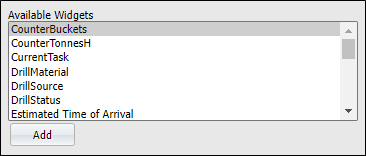
The Available Widgets list displays the widgets that have not been added to the profile configuration.
-
You can select a widget from the list and click Add to add it to the profile.
Widgets you select will be displayed in order of selection in the Selected Widgets grid at the bottom of the form
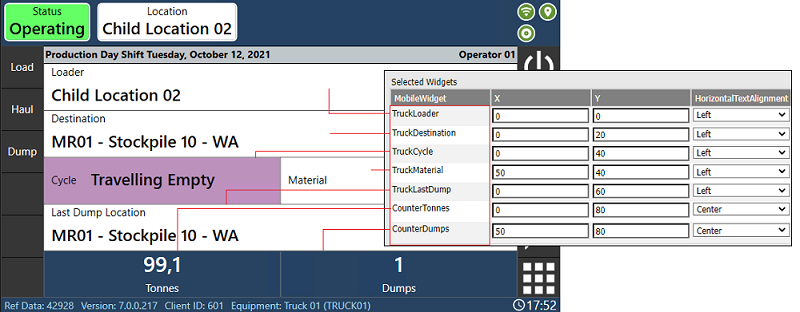
The Selected Widgets grid displays the widgets you have selected for the profile and the associated parameters for each.
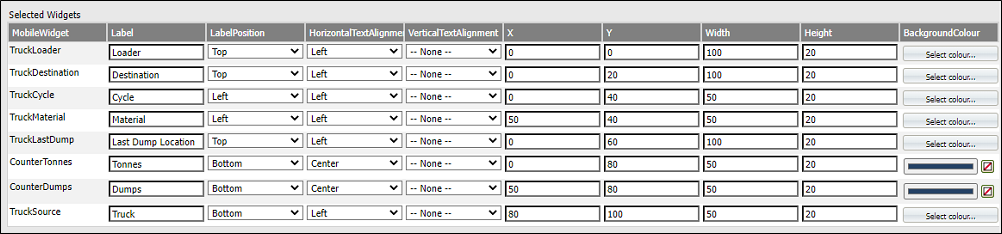
The XY options set the coordinates for the position of the widget on the screen for the profile (in percentage) - with 0, 0 being the top left corner of the mobile unit screen.
The Horizontal and Vertical Text Alignment drop down menus are used to select the alignment options of the text labels for the widget on the line.
The display dimensions for the widget (in pixels) are entered in the Width and Height fields.
The Label Position drop down provides options for the display position of the widget text label, relative to the widget.
Enter the text for the label in the Label field.
The Select Colour button in the Background Colour field is used to set a background colour for the widget, where required.
-
If you click the Select Colour button, the default background colour is selected.
-
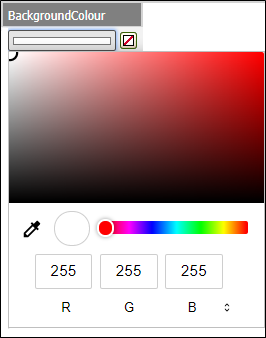
Click the colour bar to open the colour picker and select a background colour (or enter the RGB values manually).
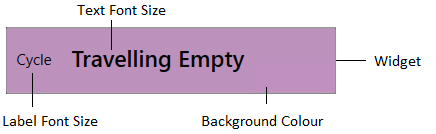
The Label Font Size field is used to enter the font size, in points, for the widget label.
Enter the font size, in points, for the text in the widget in the Text Font Size field.
The Delete button at the end of the Widget row will remove the selected widget from inclusion. The widget, once removed, will reappear in the Available Widgets list.
When the required widgets have been added and configured,
-
Click OK to add the new profile.
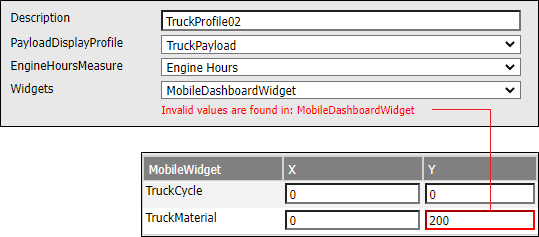
Validation is applied at the time of saving the profile by clicking OK. If validation fails, an error message will appear in the form and the option in error will be highlighted in red. You will need to reconfigure your new profile before adding it again.
The following is an example of the default Truck profile as displayed on the mobile unit screen. Note the appearance of the Truck Loader, Truck Destination and other widgets on the configured display.
-
Checkin the Mobile User Interface Profile table to save the details of the new profile.
-
Publish the reference data in the Reference Edit service.
The new Mobile User Interface Profile can now be assigned to the relevant MobileUnitConfiguration (shown below) or OperationalProfile.
For information on using Pitram Mobile devices, see What is Pitram Mobile?